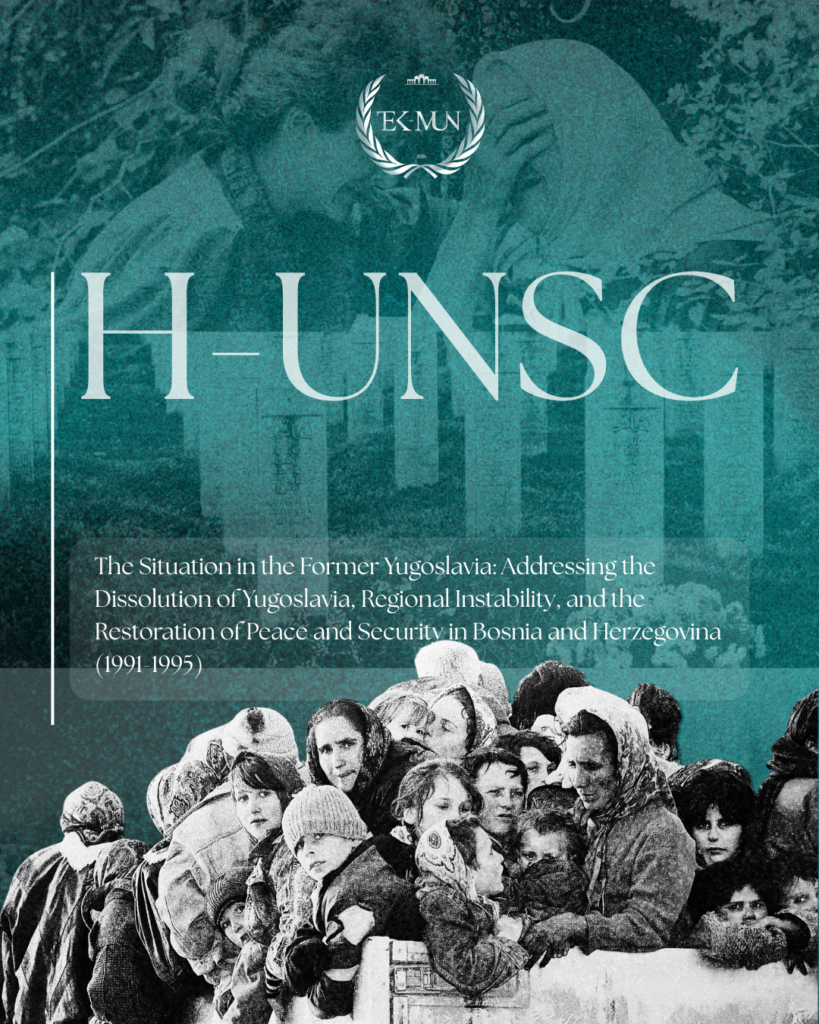
Agenda: The Situation in the Former Yugoslavia: Addressing the Dissolution of Yugoslavia, Regional Instability, and the Restoration of Peace and Security in Bosnia and Herzegovina (1991–1995)
The dissolution of Yugoslavia between 1991 and 1995 triggered one of Europe's most devastating conflicts since the Second World War. The collapse of the federation, fueled by rising nationalism, ethnic divisions, political instability, and competing claims to sovereignty, resulted in widespread violence across the Balkans, particularly in Bosnia and Herzegovina. The conflict was marked by ethnic cleansing, mass displacement, grave violations of international humanitarian law, and a severe humanitarian crisis that threatened regional peace and international security.
Delegates will examine the political and humanitarian challenges surrounding the breakup of Yugoslavia, assess the role of the international community in conflict prevention, peacekeeping, and post-conflict reconstruction, and explore diplomatic solutions to restore stability, protect civilian populations, promote reconciliation among affected communities, and establish a sustainable foundation for lasting peace and security in Bosnia and Herzegovina.